>FEB 2024 - MAR 2025
(WIRED)
Translating WIRED’s voice into motion
\Motion graphics, graphic design
↳ Context
University Assignment
↳ Timeline
1 month
↳ Tools
After effects
Photoshop
Analyzed the visual rhetoric of WIRED magazine, translating it into a mobile format, then communicating it with motion.
The challenge was understanding WIRED not just as individual pages, but as a collection of visual and verbal content, and making design decisions that intentionally supported the magazine’s voice.
Deliverables
Challenges
Began with jumping into WIRED’s issues, looking for repetitive visual cues to perform a typological analysis.
Collecting WIRED’s use of type over multiple issues and organizing them into distinct categories (e.g. folio, caption, image caption, links, etc.) and doing the same with imagery and colour.
Had to ensure that my observations were from WIRED’s unique editorial voice and didn’t mimic other magazines.
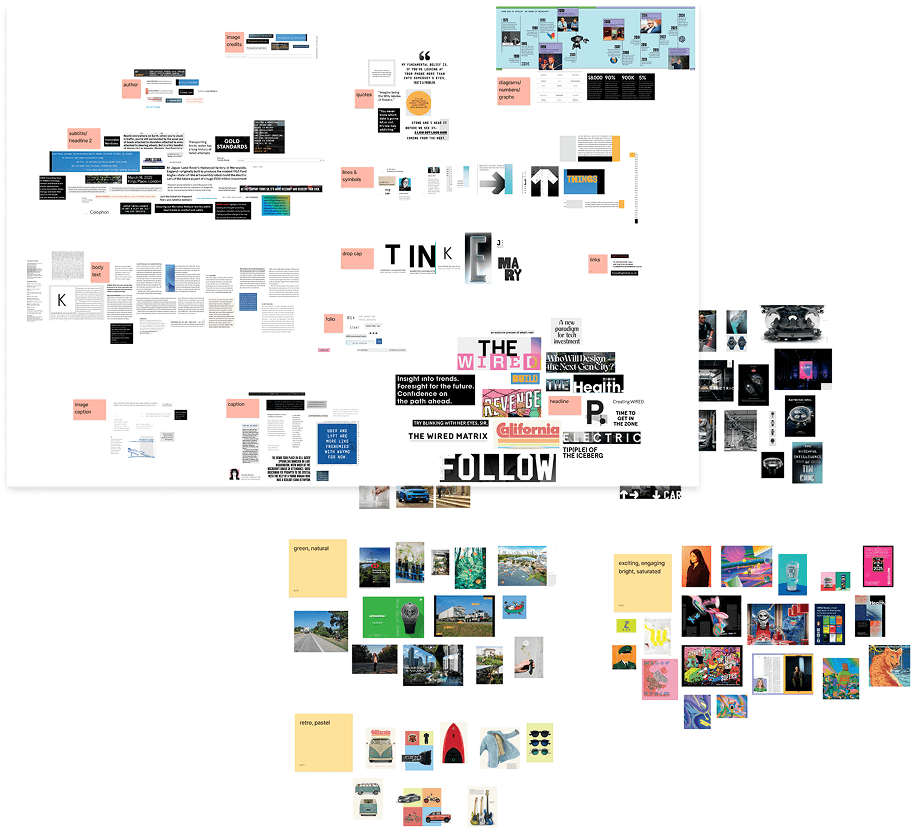
Initial analysis.
Established a hierarchy of rhetoric with the order of importance being 1) Ethos 2) Logos 3) Pathos.
Ethos came first, given the magazine’s futuristic, tech-driven aesthetic and its focus on thought leaders. Their use of eye contact and authority figures established credibility and relatability with a niche audience.
Logos followed, communicated through stylistic cues like thin lines (separating columns), bold rectangles (marking sections), and arrows guiding the reader through each spread. Through my iterations, I made sure that my visual summary wasn’t just visual replication.
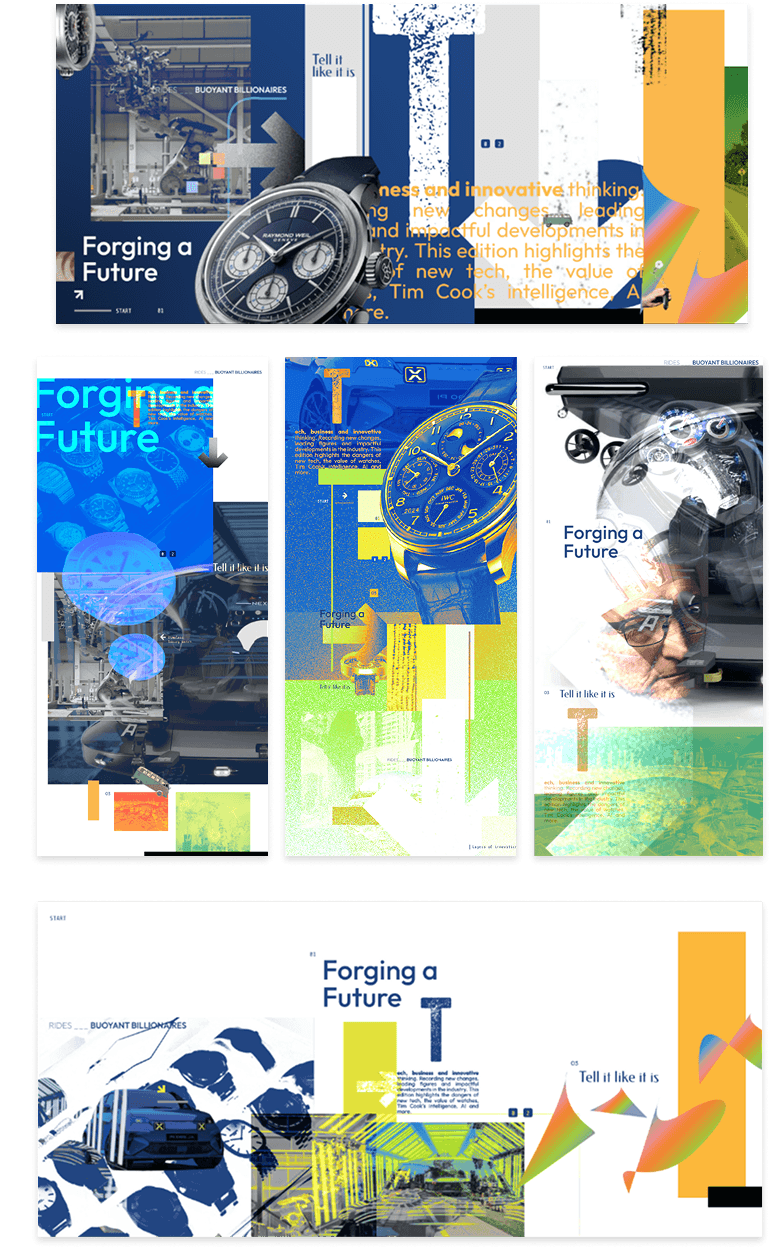
Static Compositions.
I was leaning on Photoshop’s own visual rhetoric, focusing on the wrong subjects, and struggling with legibility.
To fix this, I stripped my layouts down to the minimum elements needed to clearly communicate WIRED’s voice, which led to more intentional and refined outcomes.
I ran into this while working on the static compositions.
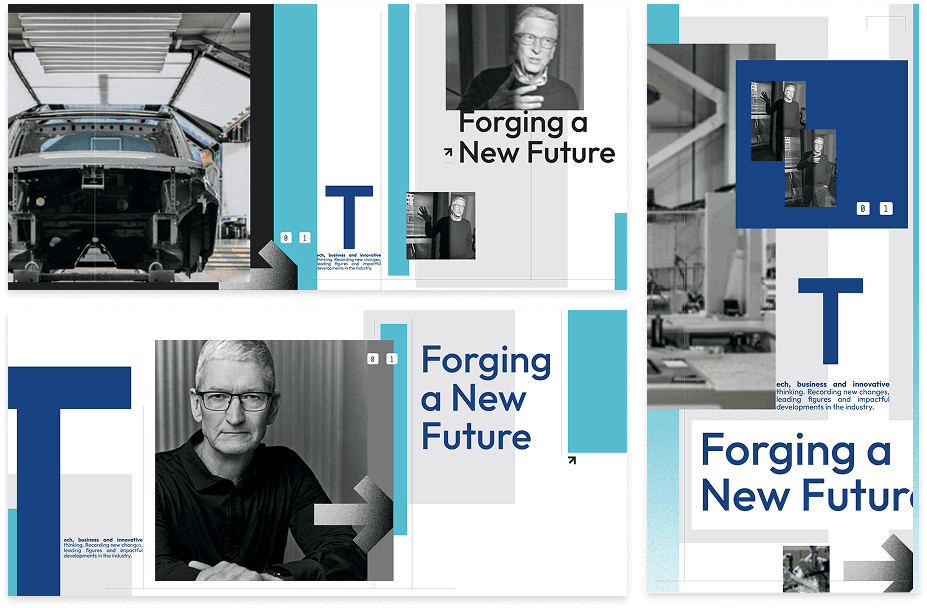
Static Compositions.
Translated the magazine’s rhetoric into motion by looking for implied movement.
At first, I mainly thought about the individual actions that each element could take on and then combined those all together but then, I realized that relationships should take the focus after figuring out individual implied motions.
All of the individual actions could make sense but could mean something completely different as a whole.
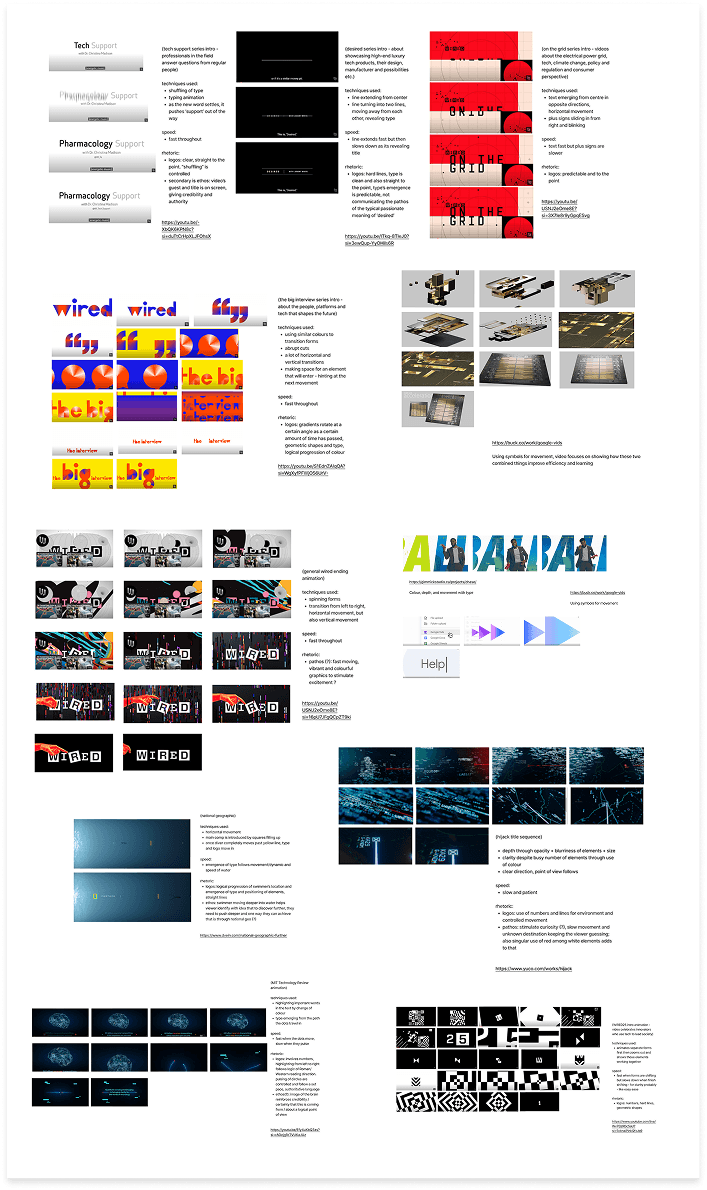
Static Compositions.
I noticed that:
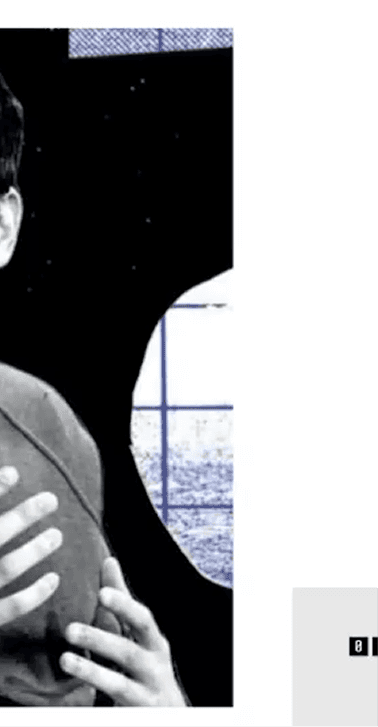
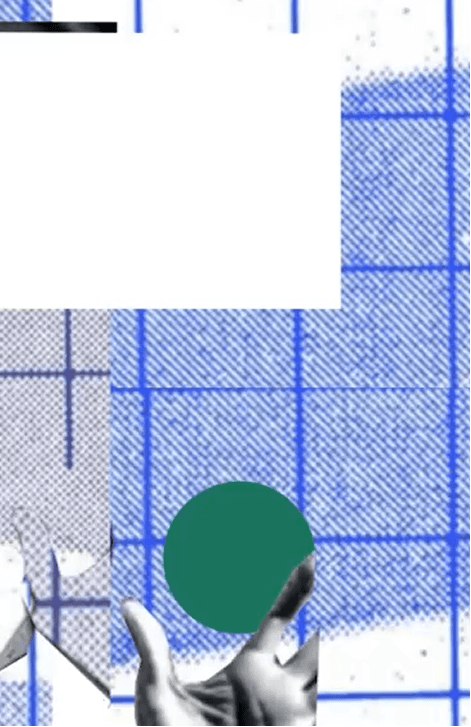
images often break outside linear boxes (depth, acceleration)
thin lines dictate text flow (alignment, isolation, shifting)
coloured rectangles set rhythm and pacing (frame, compress)
body text often presses against hard edges (tension, nesting)
outcomes
Produced a series of motion pieces that communicated WIRED's identity clearly.
I translated WIRED’s static designs into motion using storyboards and animation studies, applying principles like depth, pacing, and rhythm to capture the magazine’s energy.
iMPACT
Developed a deeper understanding of how relationships between visual elements and individual characteristics can contribute to an identity.
I developed a deeper understanding of how relationships between visual elements and individual characteristics can contribute to an identity.